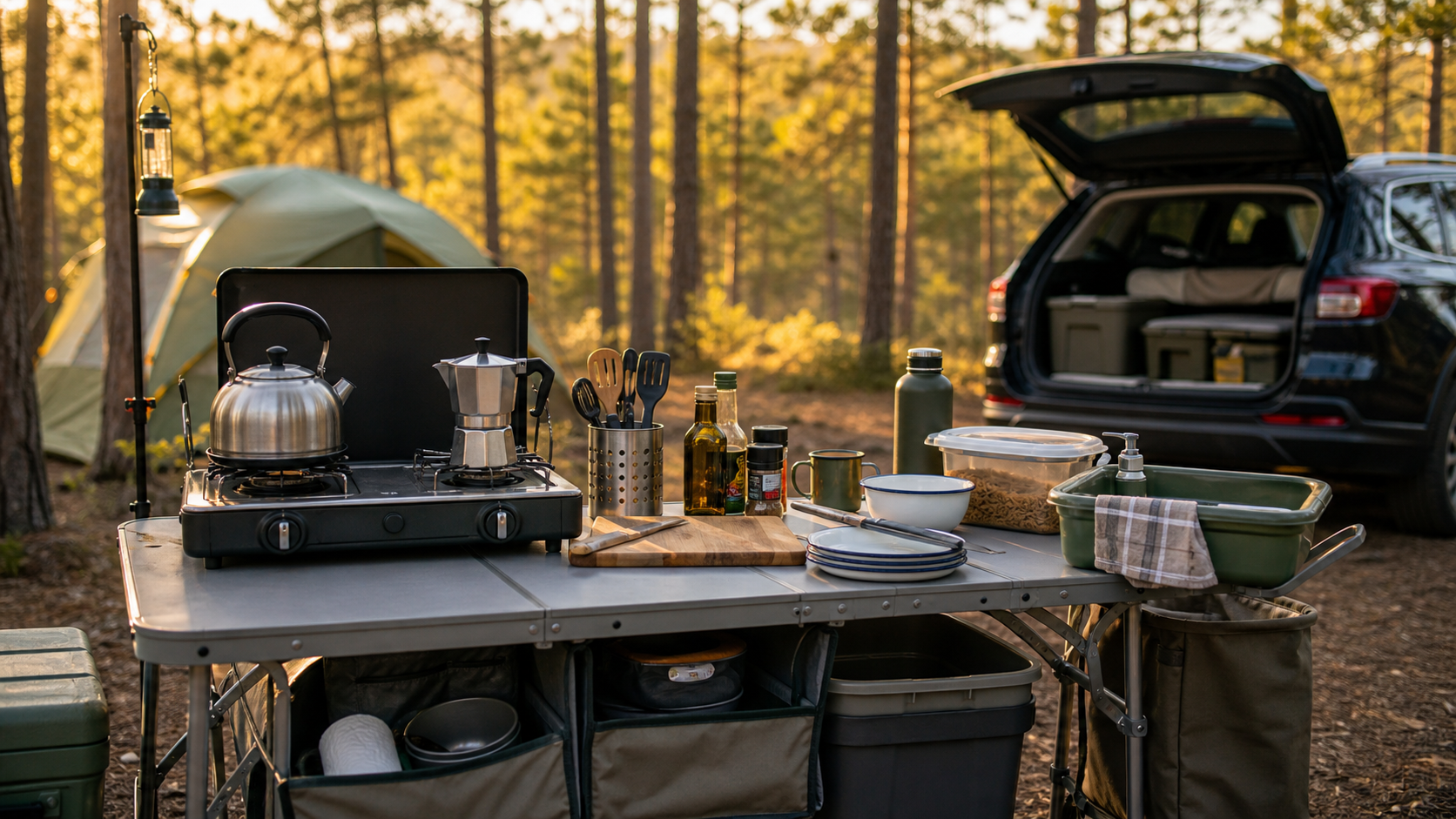
A camp kitchen does not need to look like a mobile restaurant. It needs to make coffee, cook dinner, keep food organized, and clean up without turning the campsite into a gear explosion.
Quick verdict
Start with stove, fuel, water, prep surface, lighting, and cleanup. Add comfort items only after the basics fit neatly in one or two bins.
What we looked for
For this camping piece, we focused on the details that matter on real weekends: packability, weather resistance, comfort after several hours of use, setup time, durability, and value. We favor gear that solves common trip problems without adding unnecessary bulk.
Pros
- A simple bin system prevents forgotten basics
- Two-burner stoves remain the easy family option
- A wash station makes cleanup less annoying
Tradeoffs
- Too many gadgets slow down short trips
- Open food storage attracts campsite problems
Who it is for
This guide is written for travelers, hikers, and campers who want dependable gear for weekend trips, national park travel, car camping, and light backcountry use. It is not aimed at expedition specialists or people chasing the absolute lightest possible kit at any cost.
How to choose
- Match the trip length. Weekend gear should be comfortable and repeatable, not just impressive on paper.
- Check the failure points. Zippers, poles, straps, buckles, waterproof coatings, battery covers, and seams usually matter more than headline specs.
- Think about storage. Good outdoor gear should be easy to dry, clean, recharge, repack, and use again next month.
- Buy for your weather. A desert road trip, a wet shoulder-season hike, and a humid family campsite need different tradeoffs.
Update note
TrekBench reviews are updated when product lines, availability, field notes, or reader questions change. We keep older recommendations visible when they still explain useful buying decisions.
The Core Camp Kitchen Checklist
Cooking
- Two-burner stove plus fuel (check connections before the trip)
- Lighter and backup matches
- One frying pan, one pot, a kettle or coffee maker
- Spatula, tongs, serving spoon, knife, cutting board
Eating
- Plates, bowls, mugs, cutlery per person
- Paper towels or reusable cloths
Food storage
- Cooler with ice or ice packs; block ice lasts longer than cubes
- Dry-food bin, labeled
- Bear-safe storage where required
Cleaning
- Wash basin, biodegradable soap, scrub pad
- Trash and recycling bags
- Water jug for washing and drinking
Organizing the Kitchen
A dedicated kitchen bin that stays packed between trips saves time. Keep a printed checklist taped inside the lid and restock after each trip.
Cooler Tips
Pre-chill the cooler, pack in layers (frozen items at the bottom), and keep drinks in a separate cooler to reduce how often you open the food cooler. Keep raw meat sealed to avoid cross-contamination.
Leave No Trace
Strain food scraps from dishwater, pack them out, and scatter gray water at least 200 feet (about 60 meters) from water sources where rules allow, or use campground disposal facilities.
Meal Planning
Plan meals by day, prep ingredients at home, and pick one-pot dinners to reduce cleanup.