Affiliate disclosure: TrekBench may earn a commission from some merchant links. Our recommendations remain independently edited and commissions do not affect verdicts.
Author: Evan Brooks · Last updated: Jun 30, 2026
A hiking footwear comparison for readers choosing between traditional support and cushioned modern trail comfort.
Comparison Verdict
Traditional hiking shoes tend to feel familiar and planted, while cushioned fast-hiking designs can feel smoother over long easy miles.
Comfort
Comfort depends on foot shape, midsole feel, heel hold, and how the shoe behaves after several hours, not just how soft it feels in the first minute.
Grip and Stability
Grip must be judged on wet rock, dusty trail, roots, and downhill braking. Stability matters most when tired feet get sloppy.
Fit Notes
Readers with wide feet, narrow heels, or arch sensitivity should treat fit as the deciding factor.
Who Should Choose Traditional Support
Choose a more classic hiking shoe if you value predictable structure, durable uppers, and a grounded trail feel.
Who Should Choose Cushioning
Choose a cushioned platform if your hikes involve long approaches, hard-packed trails, and comfort-first travel days.
Two Different Design Philosophies
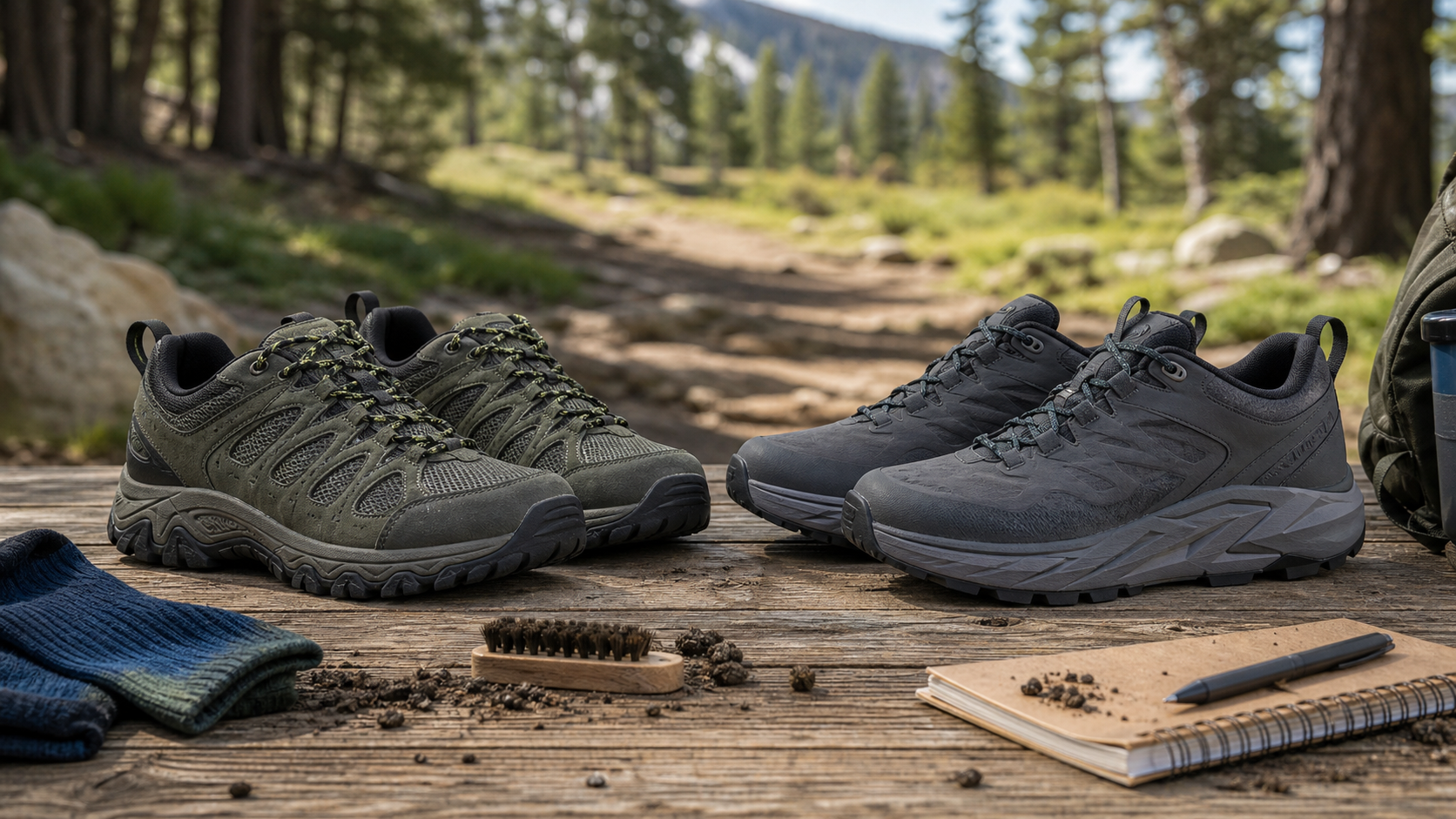
The Merrell Moab line has been one of the best-selling hiking shoes for well over a decade. Its design is traditional: a supportive midsole with a heel cup, a Vibram outsole, and a fit that many people with average to slightly wide feet find comfortable from the first wear. The Hoka Anacapa series takes the brand’s running-shoe approach to hiking: a thicker, softer, rockered midsole that reduces impact and helps roll the foot forward, often with a more modern, lighter upper.
Neither is objectively better. The right pick depends on your feet, your terrain, and what kind of comfort you value: stable and grounded, or cushioned and smooth.
Comfort and Cushioning
Readers and reviewers consistently describe the Moab as comfortable with little break-in, with a moderate cushion that feels firm compared with Hoka. The Anacapa’s higher stack absorbs more impact on hard-packed trails and long descents, which many hikers with sore knees or plantar fasciitis appreciate. The trade-off is ground feel: a high stack can feel less precise on uneven, rocky terrain, and some hikers feel less stable when the foot sits higher above the ground.
Grip and Stability
Both lines use Vibram rubber outsoles in most versions. Moab lugs are well suited to mixed dirt and rock, while Anacapa versions typically have multi-directional lugs suited to general trail use. Stability comes from different places: the Moab relies on a structured heel and a lower platform; the Anacapa relies on a wide base and rocker geometry. On off-camber ground, a lower shoe is usually easier to control.
Fit Notes
- Moab: generally a roomy toe box; wide sizes are widely available.
- Anacapa: a more performance-shaped fit; wide versions exist for some models.
- Try shoes later in the day when feet are slightly swollen, with the socks you hike in.
- Leave about a thumb’s width of space in front of the longest toe for descents.
Waterproof vs. Breathable Versions
Both lines come in waterproof (often GORE-TEX) and non-waterproof versions. Waterproof membranes keep out puddles and morning dew but trap heat and take longer to dry once water gets in over the collar. In hot, dry climates or for river-crossing routes, a breathable mesh version often ends up more comfortable.
How to Decide
| If you… | Lean toward |
|---|---|
| Want a familiar, stable shoe with easy fit | Merrell Moab |
| Have joint pain or hike long hard-packed miles | Hoka Anacapa |
| Hike rocky, technical, off-camber trails | Moab (lower platform) |
| Prefer lighter, running-shoe feel | Anacapa |
| Have wide feet and want many size options | Moab |
Prices and current versions change often; check both brands’ sites and retailer return policies so you can try them on at home.
FAQs
Is this recommendation independent? Yes. TrekBench recommendations are edited independently and affiliate relationships do not decide our verdicts.
How should I use this guide? Use it to shortlist gear, then compare fit, return policies, local conditions, and your actual trip needs.