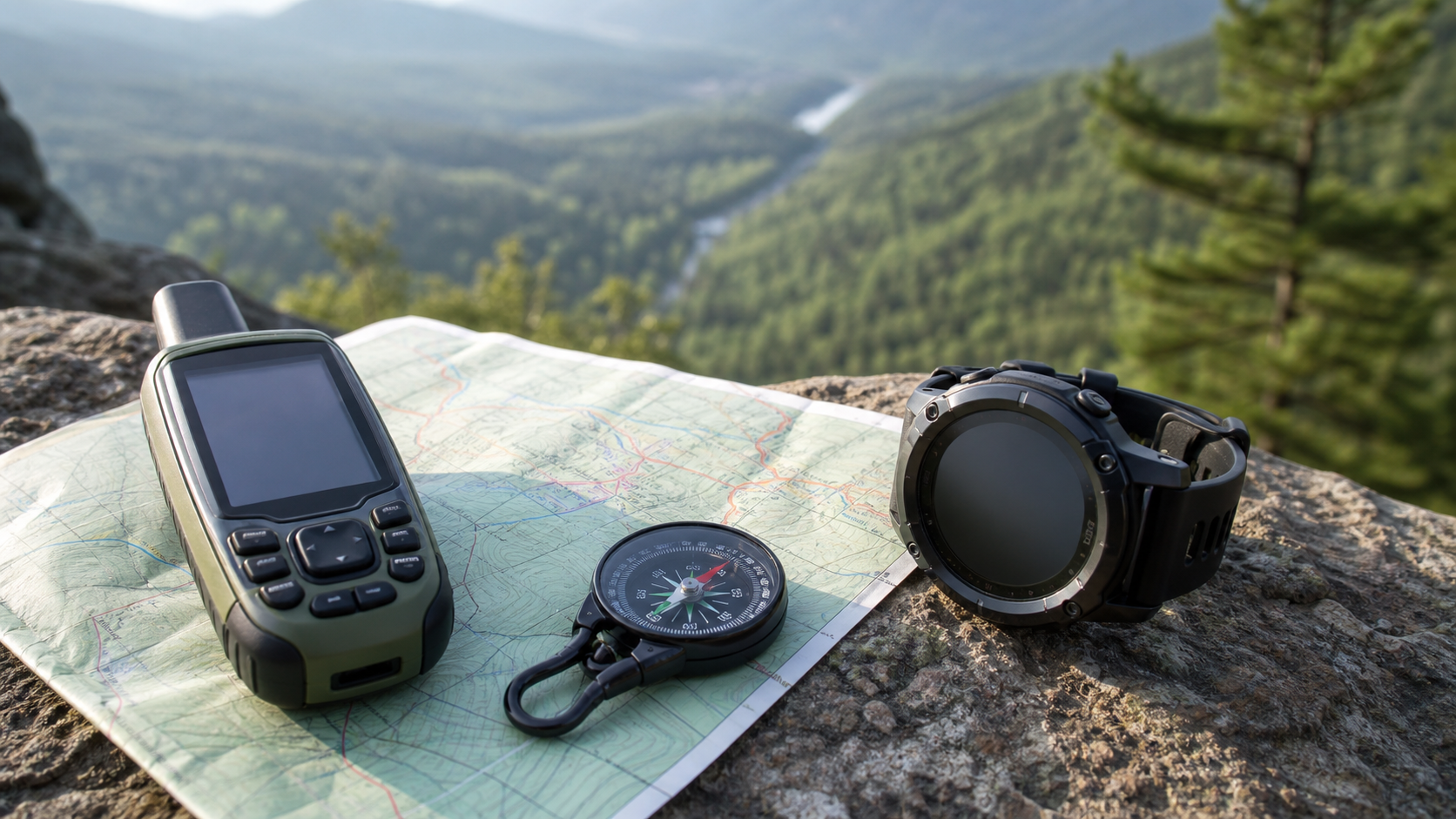
Navigation gear is easy to overbuy. A GPS watch, phone app, paper map, and handheld navigator all solve different problems, and the right setup depends on route risk and battery discipline.
Quick verdict
For marked day hikes, a phone map plus watch is often enough. For remote terrain, add a paper map and a dedicated backup with fresh batteries.
What we looked for
For this comparisons piece, we focused on the details that matter on real weekends: packability, weather resistance, comfort after several hours of use, setup time, durability, and value. We favor gear that solves common trip problems without adding unnecessary bulk.
Pros
- Watches are great for pace, distance, and quick checks
- Handheld units offer better controls with gloves
- Paper maps still matter when electronics fail
Tradeoffs
- Small screens limit route planning
- Satellite features can increase subscription cost
Who it is for
This guide is written for travelers, hikers, and campers who want dependable gear for weekend trips, national park travel, car camping, and light backcountry use. It is not aimed at expedition specialists or people chasing the absolute lightest possible kit at any cost.
How to choose
- Match the trip length. Weekend gear should be comfortable and repeatable, not just impressive on paper.
- Check the failure points. Zippers, poles, straps, buckles, waterproof coatings, battery covers, and seams usually matter more than headline specs.
- Think about storage. Good outdoor gear should be easy to dry, clean, recharge, repack, and use again next month.
- Buy for your weather. A desert road trip, a wet shoulder-season hike, and a humid family campsite need different tradeoffs.
Update note
TrekBench reviews are updated when product lines, availability, field notes, or reader questions change. We keep older recommendations visible when they still explain useful buying decisions.
Watch vs. Handheld: Different Strengths
GPS watches (Garmin Fenix and Instinct, Coros, Suunto and others) put your location, elevation, breadcrumb track and often topo maps on your wrist. Handheld GPS units (such as the Garmin GPSMAP and eTrex lines) have larger screens, physical buttons, longer battery life on replaceable batteries in some models, and stronger antennas in many cases.
Comparison
| Factor | GPS watch | Handheld GPS |
|---|---|---|
| Screen size | Small | Larger, easier to read maps |
| Convenience | Always on wrist | Must be pulled out |
| Battery | Days to weeks depending on GPS mode | Long; some use AA batteries |
| Fitness features | Heart rate, training metrics | Minimal |
| Glove use | Small buttons | Large buttons |
Where the Phone Fits
A smartphone with offline maps is now the most common navigator, with the best screen and maps. Its weaknesses are battery life, fragility, and cold. Many hikers use a phone for planning and detailed navigation, and a watch for quick checks and track recording.
Multi-band GNSS
Newer watches and handhelds support multi-band (dual-frequency) GNSS, which can improve accuracy near cliffs, in canyons and under tree cover, at the cost of more battery drain.
Choosing
Pick a watch if you want fitness tracking plus quick navigation. Pick a handheld if you navigate off-trail often, travel in cold conditions, or need long battery life. In either case, carry a paper map and compass as backup.