Affiliate disclosure: TrekBench may earn a commission if merchant links are added to this article. This guide is independently edited and based on public outdoor safety guidance, gear specifications, and practical route-planning logic rather than sponsored field testing.
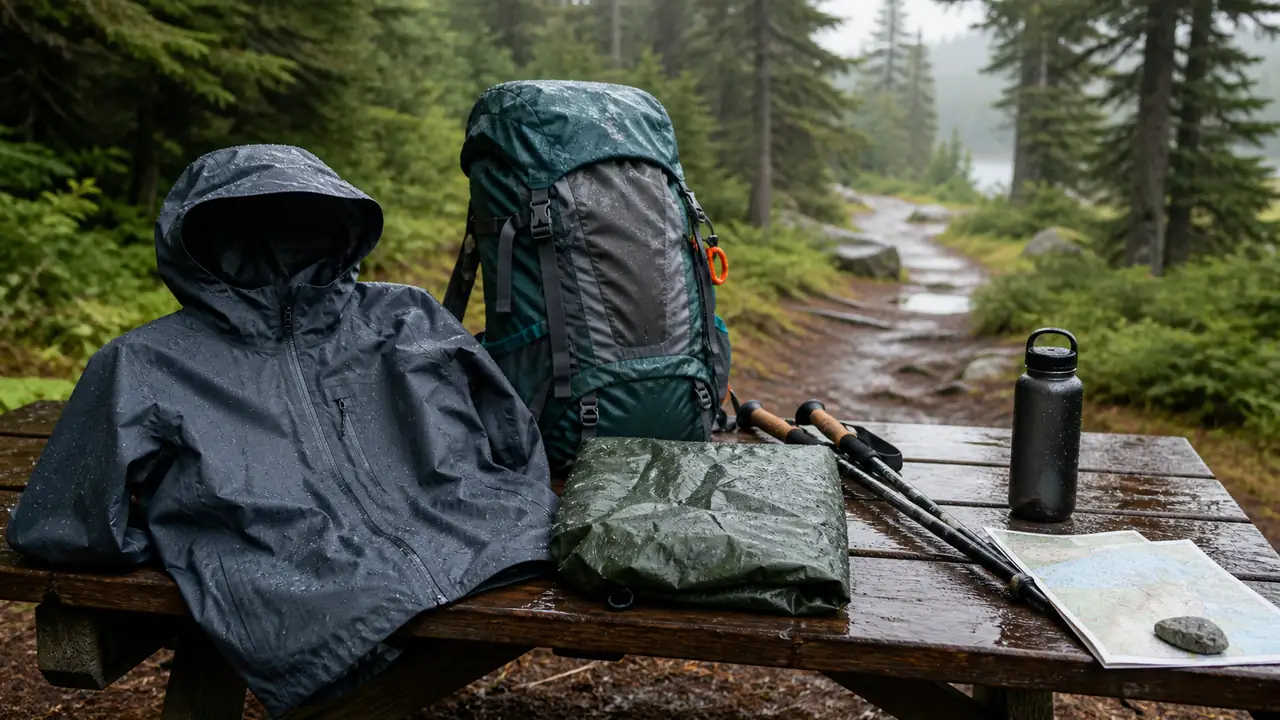
Quick verdict: pack a rain jacket when you expect wind, sustained hiking, brushy trails, colder weather, or a route where reliable movement matters. Pack a poncho when you want cheap, broad rain coverage for warm-weather trails, low-output camp chores, festivals, or emergency backup. For most weekend hikers, a lightweight waterproof-breathable rain jacket is the better primary shell; a poncho is best as a budget or backup tool.
Rain gear looks simple until the weather changes fast. A short drizzle at camp is one thing. A cold, windy ridge walk is another. The National Park Service includes extra clothing such as a rain shell among the Ten Essentials because sudden weather changes can turn a normal day outside into a problem. The right choice is not about which item is more popular. It is about whether your rain protection still works when you are moving, sweating, carrying a pack, and trying to stay warm enough to make good decisions.
The Core Difference
A rain jacket is fitted outerwear. It protects your upper body, seals at the cuffs and hood, and usually works better in wind. A poncho is a loose rain cover. It can drape over both you and part of your backpack, vents well, and packs cheaply, but it can flap, snag, and expose your arms or sides depending on cut and conditions.
| Use case | Rain jacket | Poncho |
|---|---|---|
| Windy hiking | Better | Often poor |
| Warm rain | Can feel clammy | Vents well |
| Backpack coverage | Needs pack cover or liner | Can cover small to medium packs |
| Brushy trails | Better | Can snag |
| Camp chores | Good | Very good for quick coverage |
When a Rain Jacket Is the Better Choice
Choose a rain jacket when your route involves real hiking rather than mostly standing around. A jacket stays closer to the body, which matters in wind, on narrow trails, around branches, and while using trekking poles. Adjustable hoods, wrist closures, and hem drawcords also help seal out weather. REI’s rainwear guidance explains that waterproof-breathable shells are designed to block rain while letting sweat vapor escape, which is valuable when the activity gets your lungs and legs working.
A jacket also layers better. You can wear a base layer, fleece, or synthetic midlayer underneath and control warmth more predictably. That becomes important when rain combines with cool air. The CDC notes that hypothermia can occur even above 40°F if a person becomes chilled from rain, sweat, or cold water exposure. On shoulder-season trails, staying dry is not only about comfort.
When a Poncho Makes Sense
A poncho wins on simplicity. It is easy to throw over your body, often covers part of your pack, and creates plenty of airflow underneath. In warm rain, that ventilation can feel better than a jacket that traps heat. A poncho is also useful at camp because you can cover yourself while cooking, sorting gear, or walking to a water source.
For budget kits, a poncho can be a smart emergency layer. It gives more coverage than a tiny disposable rain jacket and can double as a ground cover or quick tarp in some designs. That said, it should not be your only plan for exposed, windy, cold, or technical routes.
The Breathability Trade-Off
Many hikers expect waterproof gear to feel dry inside all the time. That is not how rainwear works. A waterproof-breathable jacket can move sweat vapor better than a slicker, but it can still become clammy when you climb hard, carry a heavy pack, or keep vents closed. Pit zips, pocket vents, and two-way front zippers help.
A poncho breathes because it is open. Air moves from the bottom and sides. That is excellent during warm showers and low-intensity walking, but it also means wind can push rain underneath. If the poncho blows around enough that you keep grabbing it, your hands, sleeves, and pack straps may still get wet.
Backpack Protection
A poncho can cover your pack and body with one item, which is its biggest packing advantage. This works best with smaller daypacks and moderate loads. Large backpacks can pull the poncho up in the back, exposing your legs or creating awkward tension around the shoulders.
With a rain jacket, protect gear separately. Use a pack liner, dry bags, or a pack cover depending on rain risk. TrekBench generally prefers internal dry protection for critical items like sleep layers, electronics, and insulation because pack covers can shift in wind and do not protect against water entering through the back panel.
Fit and Features to Check
For rain jackets: check hood adjustment, cuff closures, hem adjustment, pocket placement with a backpack hipbelt, pit zips, and whether the jacket is long enough to cover your waist when you raise your arms. A good shell should fit over your normal midlayer without feeling like a sail.
For ponchos: check length, side closures, hood shape, pack compatibility, and fabric durability. Ultralight ponchos are easy to carry but can tear faster around branches or repeated use. A poncho that is too short may protect your torso but soak your shorts or pants.
Best Choice by Trip Type
Day hike with a forecast chance of showers: take a lightweight rain jacket. If the weather is warm and the route is mellow, a poncho is acceptable as backup.
Backpacking in mixed weather: take a rain jacket and separate pack protection. Add rain pants or a rain skirt if the forecast is serious.
Car camping: a poncho is surprisingly useful for camp chores, but keep a jacket if you plan to hike away from camp.
Travel plus light outdoor weekends: a packable rain jacket is more versatile in towns, airports, trails, and windy conditions.
Emergency kit: a poncho is inexpensive, compact, and more useful than no rain protection. For frequent hikers, upgrade to a real shell.
What TrekBench Would Pack
For a normal three-season weekend, pack a lightweight waterproof-breathable rain jacket as the primary shell. Add a small pack liner or dry bag for important gear. If the route is warm, low, and camp-focused, a poncho can ride in the car or daypack as extra coverage. If the route is exposed, cold, brushy, or windy, leave the poncho as backup and trust the jacket.
FAQ
Is a poncho enough for hiking?
Sometimes. It can work for warm, low-wind, low-commitment hikes. It is less reliable for windy ridges, cold rain, dense brush, or faster movement.
Do I need rain pants too?
For short warm hikes, maybe not. For cold rain, long exposure, or backpacking, rain pants or a rain skirt can make a major comfort difference.
Can a poncho replace a pack cover?
It can for smaller packs in mild conditions, but critical items should still be protected inside the pack with liners or dry bags.
Why do I still feel wet inside a rain jacket?
Often it is sweat and condensation, not rain leaking through. Open vents, slow your pace, and avoid overdressing under the shell.
Sources
- National Park Service, “Ten Essentials”
- CDC, “Preventing Hypothermia”
- REI Expert Advice, “How to Choose Rainwear”