Affiliate disclosure: TrekBench may earn a commission if merchant links are added to this article. This guide is editorial research based on public gear guidance and product-category evaluation, not sponsored field testing.
Quick verdict: choose an insulated inflatable pad for backpacking comfort and packability, a closed-cell foam pad for durability and low cost, and a self-inflating pad for car camping or short walks where comfort matters more than weight. For most three-season weekend trips, an R-value around 3 to 4 is the practical middle ground; warm-weather-only pads can go lower, while cold-ground camping needs more insulation.
A sleeping bag gets most of the attention, but the pad under you is what separates your body from cold ground. Without enough insulation, even a warm bag can feel disappointing. REI’s sleeping pad guidance explains that pads are rated by R-value, and higher R-values mean more insulation. That number is the fastest way to avoid buying a pad that feels comfortable in a store but cold at 3 a.m.
What R-Value Means
R-value measures resistance to heat loss. In sleeping pads, a higher R-value means better insulation from the ground. It does not measure softness, thickness, noise, durability, or how easy the pad is to inflate. Those still matter, but R-value is the warmth clue.
| Trip type | Useful R-value range | Notes |
|---|---|---|
| Warm summer camping | Under 2 to about 2.5 | Works when nights stay mild and ground is not cold |
| Three-season weekends | About 3 to 4.5 | Best all-around range for many hikers and campers |
| Cold shoulder season | About 4.5 to 5.5+ | Useful when nights dip near freezing |
| Winter or snow camping | 5.5+ or stacked pads | Often requires a dedicated winter sleep system |
These ranges are practical starting points, not medical advice or survival guarantees. Your sleeping bag, shelter, clothing, campsite surface, wind, humidity, and metabolism all affect comfort.
Closed-Cell Foam Pads
Closed-cell foam pads are the simplest option. They fold or roll, do not require inflation, and are hard to destroy. REI notes that foam pads are usually the cheapest and very durable, with comfort as the main compromise.
Choose foam if you are building a budget kit, camping with kids, adding backup insulation, or expecting rough ground that could damage an inflatable pad. Foam also makes a useful sit pad around camp and can be strapped outside a pack without much worry. The downside is bulk. Foam pads take up space, and many side sleepers find them too firm.
Inflatable Pads
Inflatable pads are the comfort and packability choice. They can be thick, light, and small in the pack. Insulated versions can also provide strong warmth for their weight. This is why many backpackers choose them for weekend routes.
The trade-off is vulnerability. Inflatable pads can puncture, leak, or fail at the valve. A repair kit is not optional if the pad is your only ground insulation. They can also be noisy, slippery, or slow to inflate depending on design. If you camp with a dog, sharp gear, cactus, or rough tent platforms, durability becomes more important than shaving a few ounces.
Self-Inflating Pads
Self-inflating pads combine open-cell foam and air. They are often warmer and more comfortable than thin foam, but heavier and bulkier than ultralight inflatables. For car camping, basecamp weekends, and short walk-in sites, they can be excellent.
Their biggest advantage is a more mattress-like feel with less bounce than many air pads. Their biggest disadvantage is packed size. If your TrekBench trip starts with airport travel or a long approach, a self-inflating pad may be too much.
How to Choose by Sleeping Style
Side sleepers: prioritize thickness and pressure relief. A warmer inflatable or self-inflating pad is usually better than thin foam.
Back sleepers: you may tolerate thinner pads and can choose more aggressively for weight and durability.
Cold sleepers: buy more R-value than the minimum. Ground chill often feels worse near dawn.
Restless sleepers: check width and surface texture. A narrow slippery pad can make a good sleeping bag feel frustrating.
Pad Shape, Width, and Length
Regular mummy-shaped pads save weight but reduce elbow and knee room. Rectangular pads are heavier but friendlier for shifting positions. Wide pads can be worth the weight penalty if you sleep poorly on standard width. Short pads save weight, but your legs and feet need another insulation plan, such as a foam sit pad or empty pack under the calves.
Stacking Pads
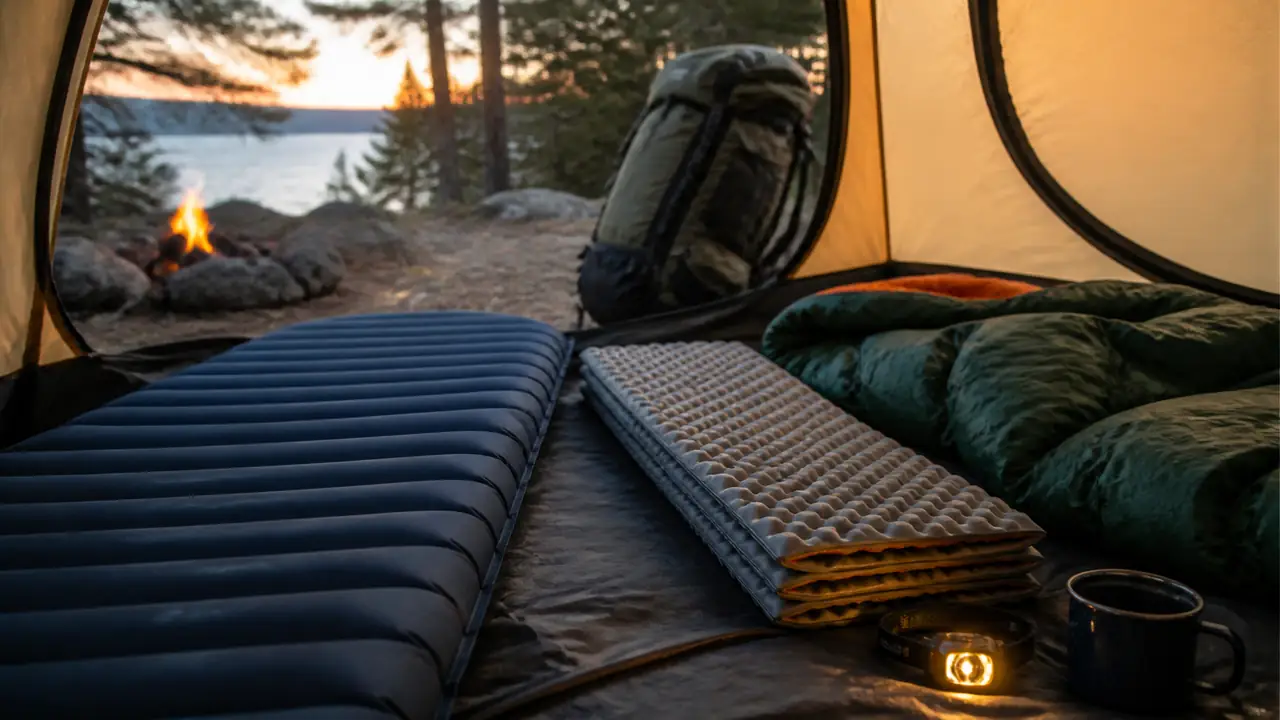
Stacking a foam pad under an inflatable can add warmth, puncture protection, and camp versatility. This is useful in cold shoulder season and winter. Put the foam pad underneath to protect the inflatable from rough ground. The stack is bulkier, but it gives redundancy if the inflatable leaks.
What to Skip
Skip a pad with no clear R-value if warmth matters. Skip ultralight pads if you are rough on gear and unwilling to patch leaks. Skip huge self-inflating pads for backpacking unless the route is short. And skip buying only by thickness, because a thick uninsulated air mattress can still feel cold from underneath.
Final Recommendation
For one do-most weekend pad, buy an insulated inflatable with an R-value around 3 to 4.5, enough width for your sleep style, and a repair kit. Add a closed-cell foam pad if you camp in colder weather, use rough sites, or want a reliable backup. For car camping comfort, a self-inflating pad may be worth the extra bulk.
FAQ
Is a higher R-value always better?
It is warmer, but not always lighter, cheaper, or more packable. Match warmth to season and route.
Can I use a yoga mat instead of a sleeping pad?
Not for reliable camping warmth. Yoga mats are not designed around outdoor insulation or packed durability.
Do inflatable pads pop easily?
Good pads are tougher than they look, but punctures happen. Clear the tent floor, carry a repair kit, and consider foam backup for rough trips.
Sources
- REI Co-op, “How to Choose a Sleeping Pad for Camping and Backpacking”
- REI Co-op, “Sleeping Pads for Camping & Backpacking: Foam, Inflatable & Insulated”
- ASTM International, sleeping pad thermal resistance standard references used across modern pad testing